Creative entrepreneur who builds AI systems at Scale.
Reading a room is a technical skill.

I have no engineering background. Now my team runs on tools I built with Claude Code. I wrote about it, then gave a talk to 300 people about why they should try it too.

Watch the talk See what I've built
About me
Founded a business, then accidentally became an engineer.

At Scale AI, I own the content layer for Outlier's contributor program: a weekly newsletter (54% open rate, discussed on Reddit), 100+ support macros, help center articles, and all contributor-facing emails. I also built the automation systems behind our comms workflows. Everything below came from the same instinct: if a process is manual and repeatable, I'll build something to replace it.

I studied public policy at UChicago, then went to Qualtrics where I scoped projects for 1,000+ clients across industries: my first time translating a technical product for non-technical buyers. After that I founded a photography business and have run it for five years: finding clients, closing sales, managing a team of associates. It mostly runs itself now.

The photography background is relevant in a way I didn't expect. I spend time in creative communities where the anxiety around AI is real, and I'm also someone who picked up an AI tool and used it to build things I couldn't have built otherwise. I want to be in the rooms where those conversations are happening, not just building tools from my desk.

Eliana Melmed with camera
That's me, in a previous life.
  • Never taken a CS class, built 40+ Claude Code skills anyway
  • Ran a workshop for 200 people, then onboarded teammates 1:1
  • Founded a photography business five years ago, still running
  • I want to be on stages and in rooms with founders
The talk

Vibe Coding for the Slightly Intimidated

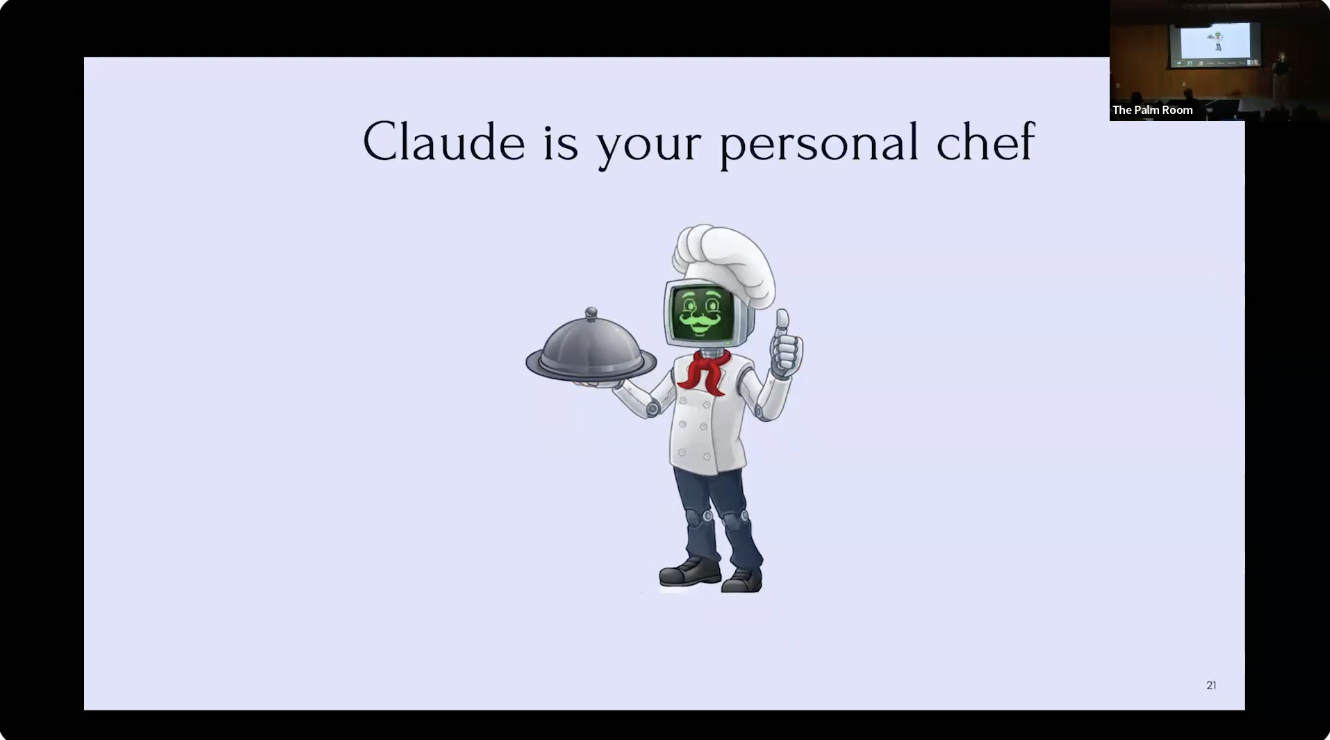
I wrote and delivered this at Scale AI's Anchor Week in April 2026. 300 people RSVP'd. The goal was to get a room of non-technical people to leave with the tools and confidence to build something real.

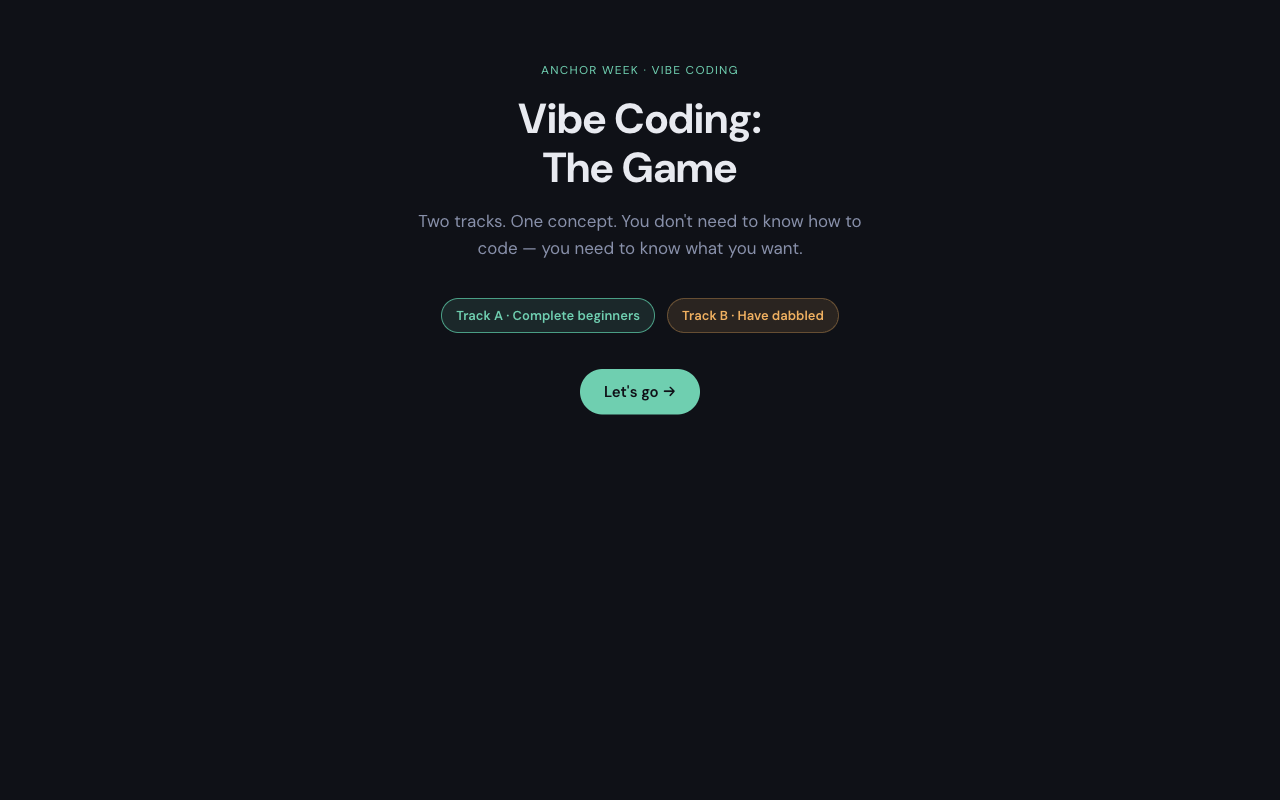
There's a companion game too, so people could keep going after the session.

^ this is what I'd base a developer summit talk on
Watch: Vibe Coding for the Slightly Intimidated
0
Claude Code skills built
0
emails sent
$225K+
in raffle prizes managed
0
tool integrations built
Work
Built with Claude Code.

CommsCat

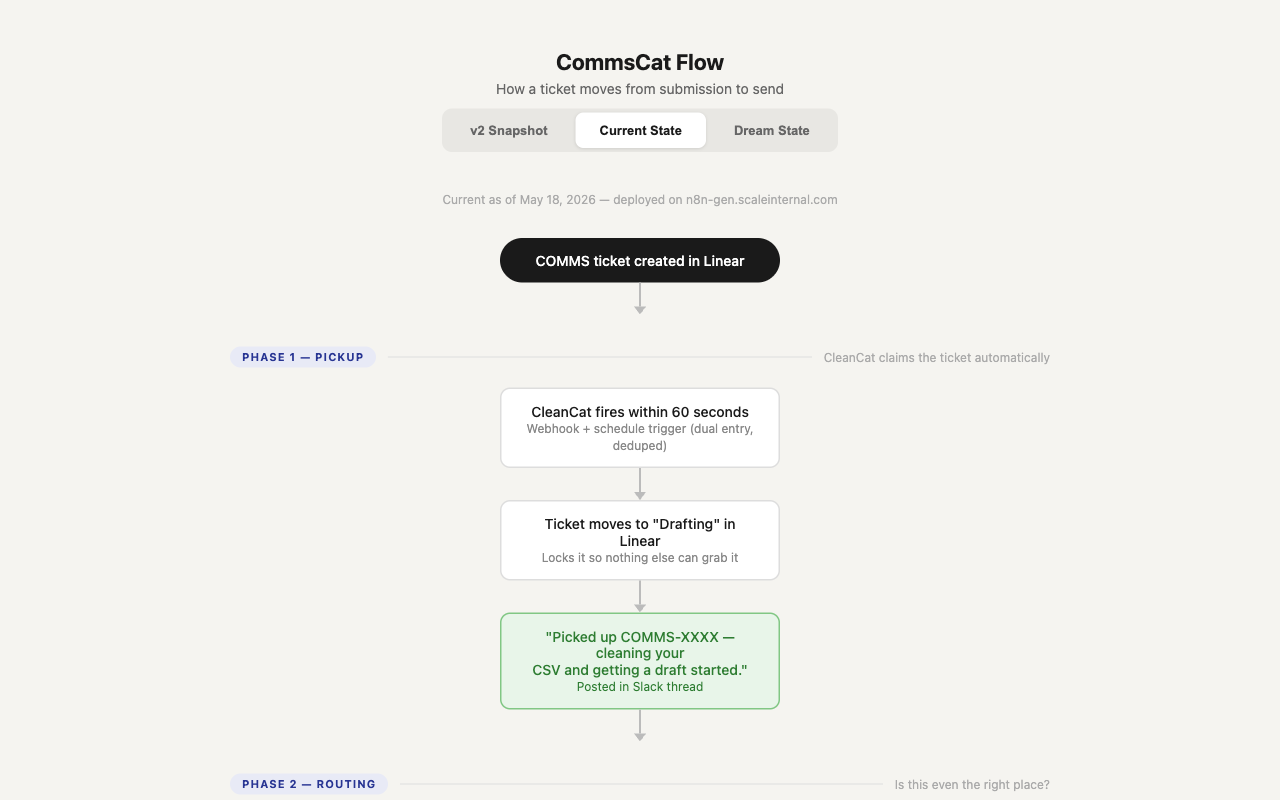
A production AI system that triages support tickets, drafts responses, and routes them for human review. Our comms team went from three people to two when a teammate went on leave, and we maintained the same output because this system had just launched. Built on n8n with two custom Slack bots, connected to Linear, Slack, Redash, and Google Sheets.

n8n 12 workflows 2 Slack bots human-in-the-loop
CommsCat decision flow diagram

What I built

I designed the entire architecture: which n8n nodes handle classification, how urgency scoring works, how the AI drafts get constrained by our brand voice guide so they don't go off-script. The human-in-the-loop step was a deliberate choice. I could have automated the send, but the team needed to trust the system first. That trust-building process is how I think about AI adoption in general.

Under the hood

This is a real Claude-powered system running in production that a non-engineer designed. It integrates 6+ tools (Slack, Linear, n8n, Redash, Google Sheets, the Claude API). It's the kind of project I'd walk a founder through in 5 minutes to show what's possible.

Weekly Newsletter

Inside Outlier newsletter header

There was no newsletter when I started at Scale. I created it from scratch, grew it to 40 editions, and now it gets discussed on Reddit: people speculate about who writes it and dissect the content. 54% open rate at a scale where 20-25% is typical. I also built the audience segmentation queries (millions of recipients, multiple tiers), a subject line analysis system, and an automated workflow that pulls in the right content each week. Beyond the newsletter, I manage the full content ecosystem: 100+ support macros, help center articles, and all contributor-facing email copy.

40 editions 52M+ emails sent 54% open rate

What I built

Content comes from teams all across the company, and nobody was coordinating it. I had to figure out who had content, how to get it from them, and what it should say when it reached contributors. I created content pillars, then built a system around them: a Slack channel for submissions, an automated content calendar app that tracks what's planned and what's published, and a weekly reporting loop that feeds performance data back to stakeholders.

Under the hood

Custom Redash queries to segment millions of recipients into the right audience tiers. An AI checker that enforces our voice guide on every draft before it goes out. A subject line analysis across all 40 editions that identified which framing styles drive higher open rates. 54% open rate across 29M+ emails, at a scale where 20-25% is typical.

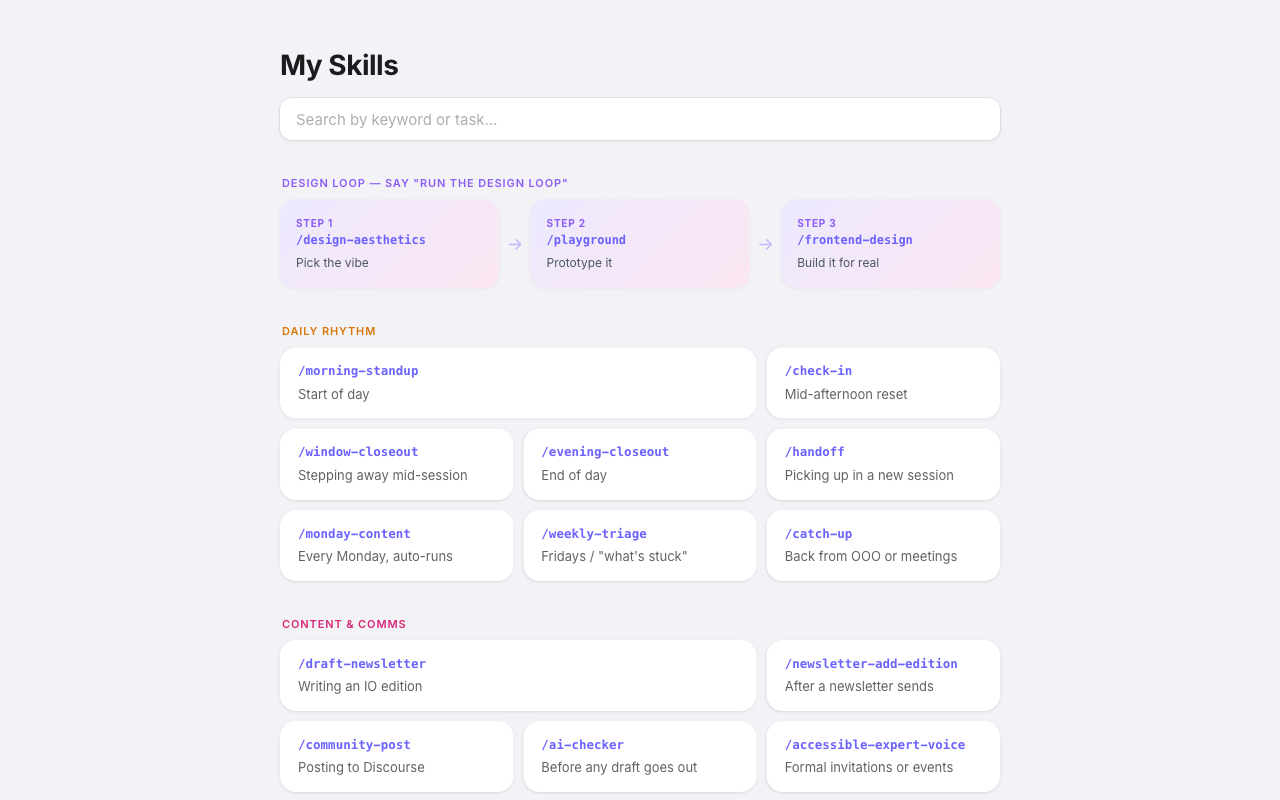
Skill Toolkit, Dashboard + Developer Enablement

Skills Visualizer showing bento grid of Claude Code skills

Every repeatable process on my team is now a Claude Code skill that anyone can run: morning standups, newsletter drafts, community posts, ticket processing. 40+ of these, shared across the team. But I also had to get people to actually use them. I ran small-group sessions, 1:1 walkthroughs, and a company-wide workshop where ~200 people showed up. Dozens DM'd me afterwards saying it changed how they thought about AI tools. I also built a Next.js dashboard that ties everything together. My team uses it daily.

40+ skills Next.js dashboard team-shared

What I built

The morning standup skill was the one that made me realize this was worth investing in. It pulls from five different tools in one command and starts my day with exactly what I need to know. It even opens Spotify and picks a new artist it thinks I'll like. After that, I kept going: every time I noticed a process that was manual and repeatable, I turned it into a skill.

Under the hood

The skills needed a home, so I built a Next.js app to tie everything together: newsletter analytics, the content calendar, raffle management, meeting notes, daily metrics. My six-person team uses it every day. I had never touched Next.js before building this.

Contributor Raffle System

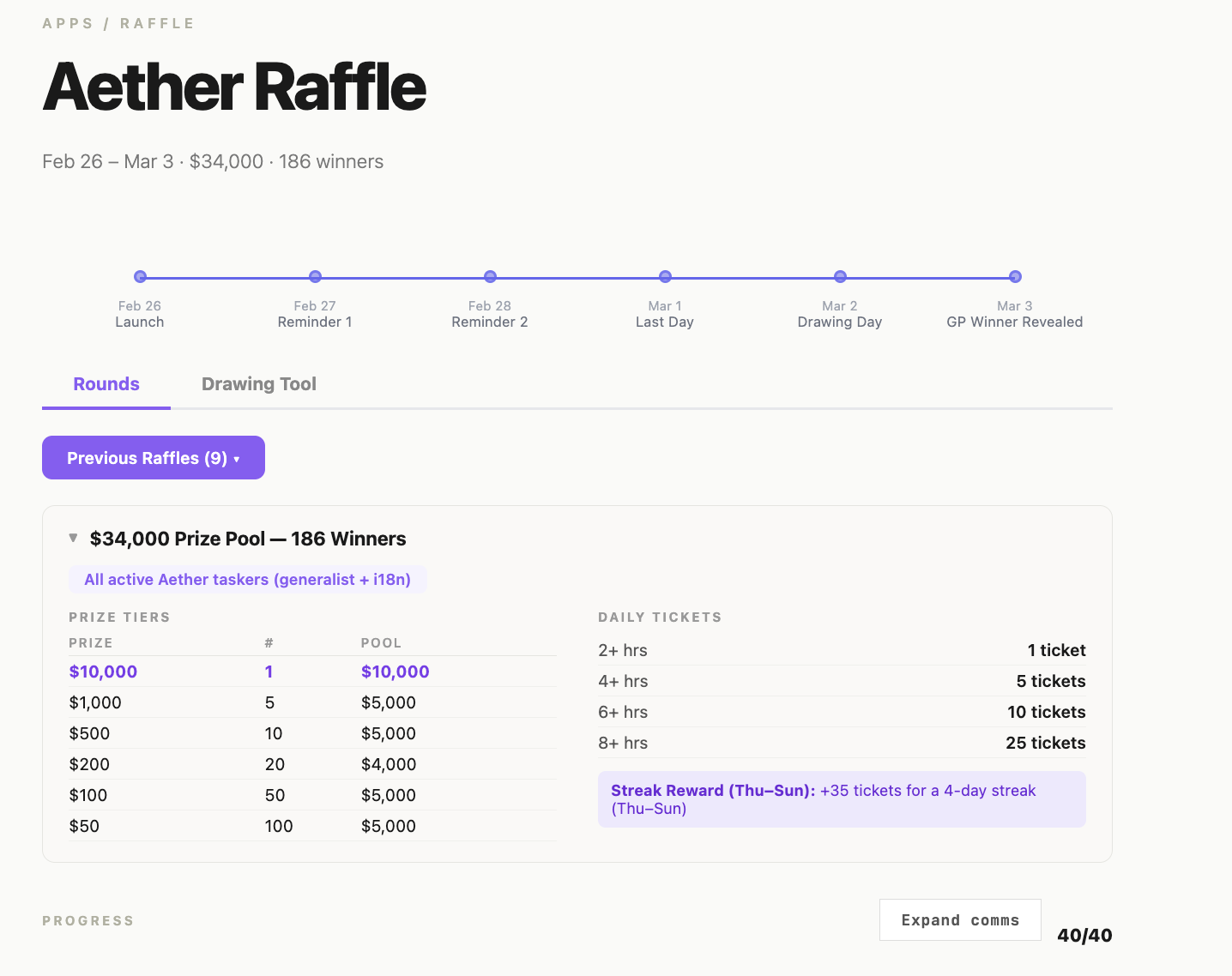
An incentive program that had never been done at Scale before. I was handed it, figured out how to run it, and built the whole operation from there. 9 rounds so far, $225K+ in prizes awarded, 1,136 winners. Each round is its own campaign: I build the audience query, write the daily emails, run the drawing, verify winners, and announce results to the community. I built a dashboard app to manage the full lifecycle.

$225K+ awarded 1,136 winners 9 rounds
Aether Raffle management app

What I built

The first round was chaos. I was manually pulling CSVs, trying to figure out how to segment audiences of millions of people, and building the process as I went. The biggest challenge was making it replicable so that each new round didn't require reinventing everything. By round 9, the whole thing runs through a dashboard app I built, with automated audience queries, configurable prize tiers, and a drawing tool that handles the randomization and verification.

Under the hood

This is a community engagement program at scale. Prize tiers range from $50 to $10,000 grand prizes. Each round involves email campaigns, community announcements, and coordination with the payments team. The skill it requires is taking something that starts messy and ambiguous and turning it into a system that other people can rely on. That's the same skill developer enablement programs need.

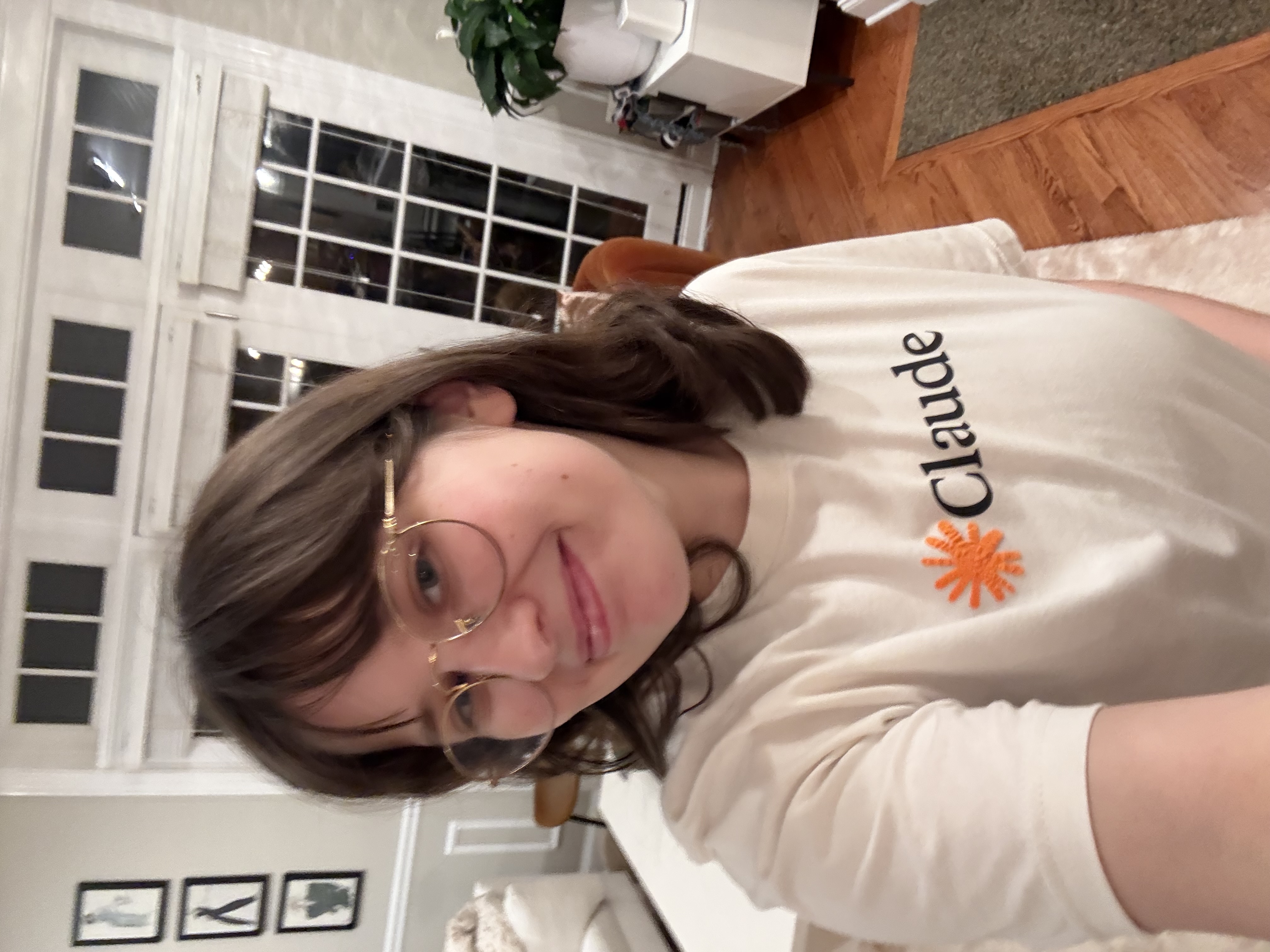
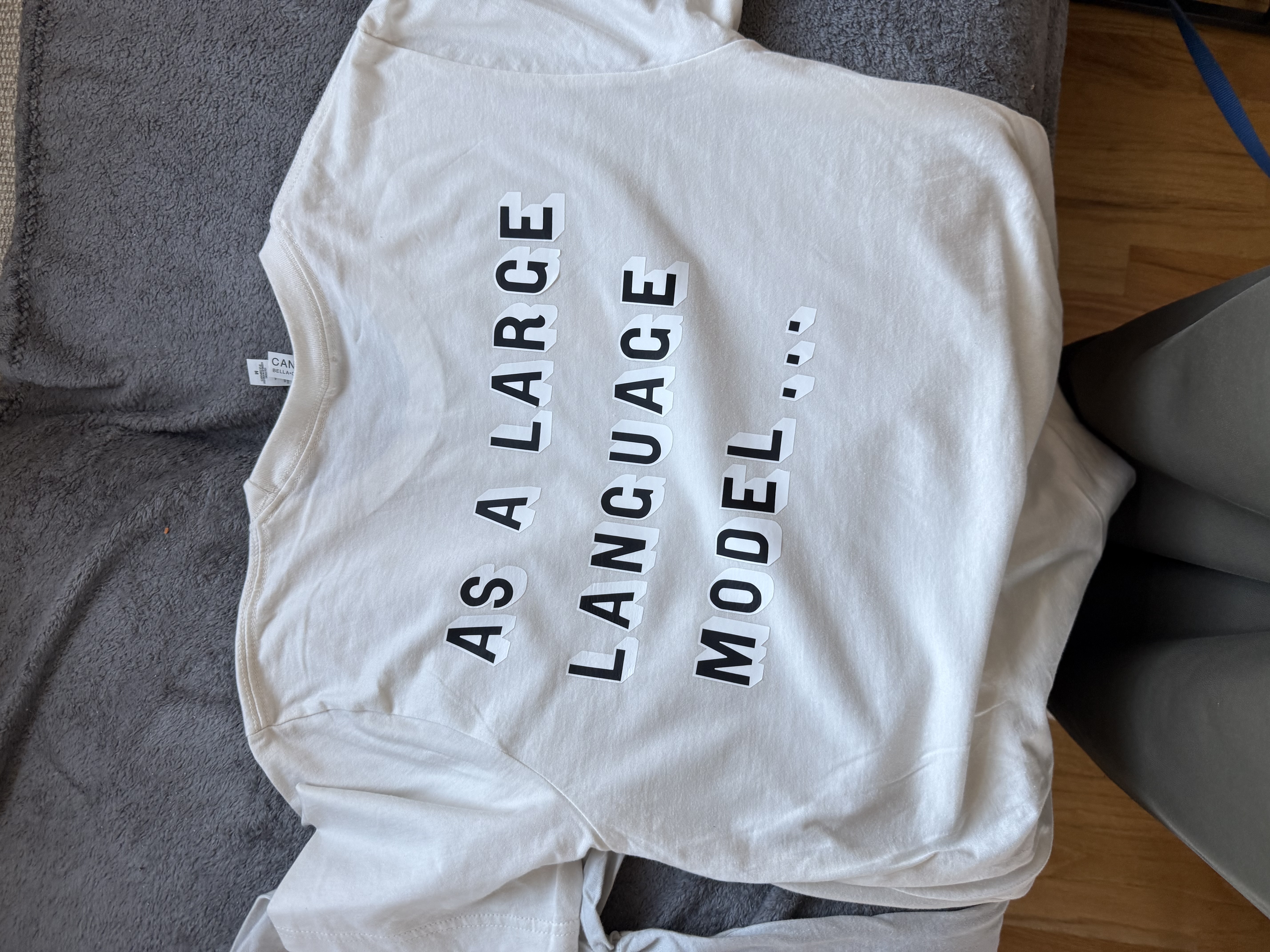
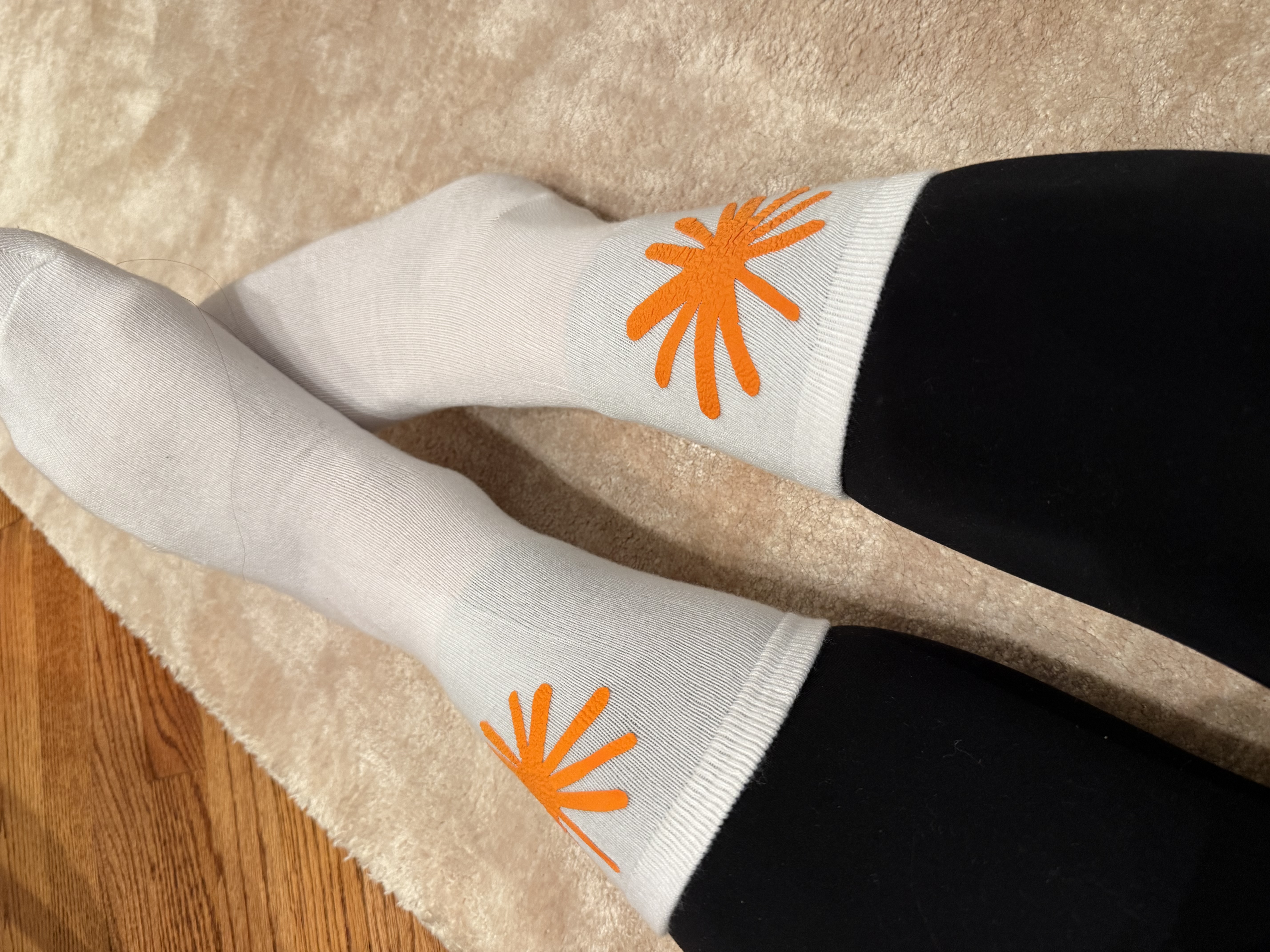
I was Claude for Halloween a few years ago.

Eliana in Claude costume Back: As a large language model... Anthropic sunburst socks

Handmade iron-ons, hours with my Cricut, and a lot of explaining at the party.

Why Anthropic?
It has to be Anthropic.

Why Anthropic?

Anthropic builds safety into the engineering, not the marketing. The interpretability research, the way Claude handles uncertainty, the care around edge cases — these things show up in the product. Working at Scale, I see every day what thoughtful AI design looks like in practice and what corners get cut when it's not a priority. I wouldn't evangelize a platform I didn't trust at the foundation level.

Why Claude Code

I used GPT before Claude and didn't like how it talked to me. I tried Cursor and Codex and didn't like the interface of either. Claude Code was the first tool where I stopped noticing the tool and started thinking about what I was making. That's a product difference, not a preference, and it's the difference that gets founders to commit to a platform.

Why startups

I founded a business from zero and have run it for five years. I know the founder mindset because I've lived it: resource-constrained, moving fast, needing tools that work on the first try. I've also spent months activating non-technical people onto Claude Code through workshops and 1:1s, which means I know what the conversion moment looks like and how to create it.

Why this matters now

Creative communities are worried about AI. Founders are curious but cautious. Anthropic's approach to safety is what makes it possible to have honest conversations with both groups. For an evangelist role, that matters as much as anything technical.

Let's talk.

Pick a project above and I'll walk you through it.

Email LinkedIn Resume

© 2026 Eliana Melmed. Built with Claude Code.